
From 1 July 2026, Tranche 2 entities will be required to comply with AML/CTF laws while providing a designated service.
AUSTRAC’s Money Laundering in Australia National Risk Assessment 2024 (ML NRA) identified that Tranche 2 entities are regularly exploited by money laundering networks. These networks use business’ services to disguise the criminal origins of their funds and reinvest them in further criminal activity.
To keep up with an ever-changing criminal environment, the Australian Government has recently reformed Australia’s Anti-Money Laundering and Counter-Terrorism Financing Act 2006 (AML/CTF Act).
Australia’s anti-money laundering and counter-terrorism financing (AML/CTF) regime includes the AML/CTF Act, the Anti-Money Laundering and Counter-Terrorism Financing Rules 2007 (the Rules) and associated regulations. It is a central part of their efforts to prevent criminals from enjoying the profits of their illegal activity and stopping funds from falling into the hands of terrorists.
On 29 November 2024, the Parliament of Australia passed the AML/CTF Amendment Bill 2024 (the Bill), amending the AML/CTF Act. The new laws reform Australia’s AML/CTF regime to ensure it continues to effectively deter, detect and disrupt money laundering, terrorism financing and proliferation financing. They also ensure these laws meet international standards set by the Financial Action Task Force (FATF), the global financial crime watchdog and standard-setter.
Key changes under the new laws
The new laws will expand AUSTRAC’s regulation into new industries that are recognised domestically and globally as high-risk for money laundering exploitation.
This includes certain designated services that are typically provided by the following businesses (Tranche 2 businesses):
- Real estate professionals such as real estate agents – buyer’s agents and property developers
- Dealers in precious metal, stones, and other products
- Professional service providers such as lawyers, conveyancers, accountants and trust and company service providers.
These new laws will not apply until 1 July 2026 for tranche 2 entities that provide designated services. These entities will be able to enrol with AUSTRAC from 31 March 2026. This is to allow time for newly regulated entities to understand and prepare for their new AML/CTF obligations.
Once your business is enrolled, you become a ‘reporting entity’ under the Anti-Money Laundering and Counter-Terrorism Financing Act 2006 (AML/CTF Act). This means you must be ready to meet your ongoing obligations under the Act, including:
- Having a risk and outcome-based AML/CTF program in place commensurate to the size, nature, complexity of the business.
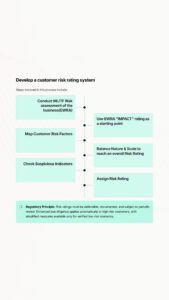
- Carrying out risk assessments and include the outcome in the AML program.
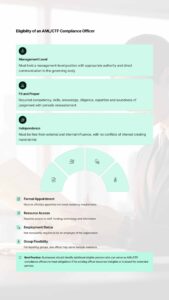
- Having appointed an eligible compliance officer to oversee AML/CTF responsibilities.
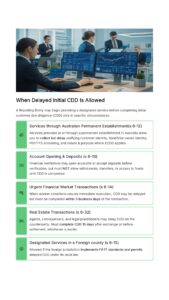
- Conducting Customer Due Diligence (CDD) during the lifecycle of the customer including OCDD, EDD.
- Reporting certain types of transactions, including those above a monetary threshold (TTR), international transfers (IFTI), information about carrying or shipping BNI, suspicious matters(SMR) and annual Compliance Reports.
- Employee Training to ensure they understand the obligation and comply with it.
- Keeping and securely storing records showing your AML/CTF activity for a period of 7 years
Useful links: